Author: @credistick

  • The Negligible Cultural Impact of AI

    The Negligible Cultural Impact of AI

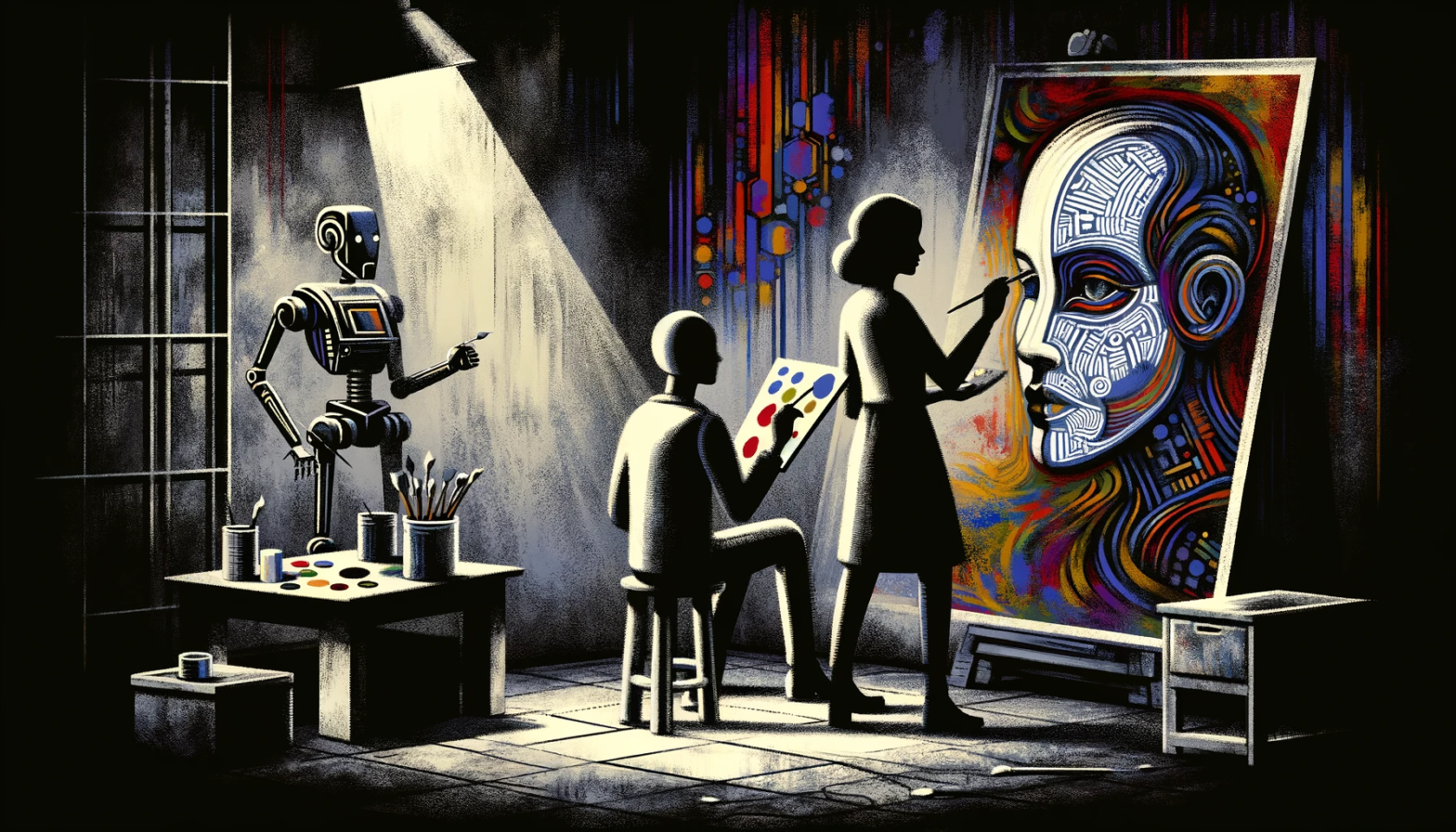
    Good art (including novels, games, movies) is defined by the humanity involved. Emotion, humour, tension. Even when AI attempts to mimic those attributes, we’ll still prefer human experiences over synthetic ones.

    We’re inclined to believe each new innovation is the ‘best’, and that the technology-driven approach is always superior. To overlook almost anything in pursuit of speed or efficiency.

    We must have the latest invention, and we’ll use it proudly until the novelty – and associated status – wears off. Then those gains in speed and efficiency can work their way to the market they’re intended for: people who are price or time sensitive.

    Microwaves were billed as kitchen gadgets for the wealthy, revolutionising home cooking. It turns out that we’d rather bake artisanal sourdough bread in a wood-fired oven, when we have the luxury of time and choice.

    We consistently overestimate the cultural impact of ‘technology for technology’s sake’. Popular visions of the future in science fiction show the wealthy living in hyper-minimal grey boxes with robots for every function. Utterly dull.

    Avatar was supposed to push the envelope for the movie industry with stereoscopic technology and CGI, offering a vivid and immersive experience like never before. It remains the highest grossing movie of all time but the cultural impact, relative to that, is miniscule. Few really cared about the story, or the characters involved.

    The protagonist of that franchise? James Cameron, with a 3D camera over his shoulder.

    AI only threatens the bottom-of-the-barrel stuff.

    Free apps, stock images, SEO-driven content.

    It is not a threat to broad swathes of industry and the arts in which humanity plays a major role. Genuine empathy and emotion is only going to become more valuable, as the rest of our lives become more technology oriented.

    That’s not to say that AI wont be powerful and practical. It is already shaping whole industries. We just need to have a realistic perspective on where that importance lies.

    Consider another parallel: artificial meat.

    It caused a brief stir when it was new and exciting, popping up in all kinds of fancy gastropubs. And then interest fell off. The ultimate customer for that product, once it meets the promise of being cheaper and greener than real meat, is not fine-dining restaurants. It is McDonalds. It is MREs. It is the boxes of frozen chicken nuggets in your local discount market.

    Nobody will love it.

  • Growth incentives – web3’s failure

    Growth incentives – web3’s failure

    Web3 has largely failed, and we should talk about it

    There’s an elephant in the room.

    In the space of just a few months, NFT PFPs have vanished from Twitter, .eth usernames have fallen out of vogue, and a whole category of social media celebrities has vanished.

    The tech world went from frothing at the mouth about the future of the internet, how life would be different in the metaverse, to “oh hey, is that AI I see over there?” and wandering off.

    I’m not surprised. I’ve spent a good amount of time writing about how web3 products have ignored consumer interests, and perhaps even more writing about how web3 has had to ignore the past in order to fake progress the present.

    I don’t mind that we’ve moved on. But we should talk about why. There should be some accountability and humility from those who were the most bullish.

    I asked on Twitter whether anyone had dared write a web3 post-mortem:

    The comparison is apt, and I suggest reading the linked article to better understand why. To summarise: the technology was cool but awkward to use, and ultimately consumers didn’t care that much.1

    So what does any of this have to do with referral programs?2

    The above explains fairly well, I think, why web3 failed to cross the chasm. There was technology, and there was money, but it was not being used to solve real problems. And yet, for a period of time, it had us all capitvated – if not actually invested. Why?

    Web3 had a monumental referral program

    One curiosity to look back upon, in all of this, is that hype for NFTs was front-running interest in ‘web3’ or ‘metaverse’.

    In Feb 2021 we were keen to learn more about these magical jpgs, but it wasn’t until April that metaverse reared its head, and only by December was interest in web3 picking up steam.

    But… weren’t web3 and metaverse concepts the use case for NFTs? How could the interest preceed the use case?

    In the beginning, people were hoodwinked into thinking this was a ‘digital art’ revolution and – thanks to a few exceptional examples – a lucrative one at that.

    ‘Digital art’ seems quaint in comparison to the grand promises of an internet revolution which came later. It doesn’t matter; it was enough. Our interest was captured, and money started to flow into the ecosystem. Consider, at this point, the old gold rush analogy about selling picks and shovels.

    NFTs provided a sufficient level of interest and capital for creative (and ethically questionable) people to invent new ways to sell more NFTs. Most metaverse ideas were borne out of this NFT gold rush, as well as much of what drives ‘web3’.

    The more ambitious these ideas became, the more we talked about it, the more celebrities and brands got involved, the more certain it all seemed. We’d share interesting projects as ‘alpha’ in exclusive chat groups, and we’d proudly represent our NFT project of choice on social media.

    The noise created was incredible, and the message was clear: join us in getting rich, or miss the train.

    This fundamentally optimised web3 adoption for those who wanted to get rich, not those who were interested in building the next interation of the internet.

    Trust, privacy and decentralisation? Nowhere to be seen.

    Much like crypto, and for similar reasons, it became cannibalistic. People backing one project would lash out at others. All competition was a threat. There was no spirit of collaboration. All motivation was pointed toward increasing the (perceived) value of a project.

    That’s a fine motivation if you are an investor, but it’s fatal when your investors are also your ‘users’. Much like a startup focusing efforts on increasing valuation rather than increasing value to users, it’s going to end with a bang.

    In conclusion…

    The collapse of web3 can be attributed entirely to the perversion of its growth.

    The ecosystem created was built around a bubble, without any incentives for long term growth. No reason to spend time identifying and solving real problems.

    It’s a shame, because buried deep in there were some people genuinely trying to build a better future, but it is incredibly difficult to maintain that focus if ‘financialization’ happens too early.

    Additional reading:

    Why you should rethink referral programs

    About a month ago, Mobolaji Olorisade and Grillo Adebiyi, of African Fintech giant Cowrywise, released a retrospective on their experimentation with referral programs for customer acquisition.

    It’s a supremely interesting read, and I reccomend checking it out, but I’ll provide a brief summary below.

    In short: referral programs are a perverse sign-up incentive, which lead to all kinds of unintended consequences. Rather than calibrating your focus on your ideal customer profile, it drags you in other directions – towards those that see an opportunity to exploit the program.

    Of all of the users of your product, it is the ones that found you organically, because you’re a perfect fit for their needs, which will sign up most readily and have have the greatest loyalty. In practical terms: the strongest LTV/CAC.

    1. If you imagine that 3D TVs had developed a similar rabidly absolutist mentality to web3 enthusiasts, demanding 3D content be exclusive to 3D TVs – and 3D TVs ONLY support 3D content, the parallels are perhaps even more vivid. []
    2. Paid referral programs are a common growth strategy in the Fintech world, particularly in the ‘growth at all costs’ era. Startups would spend VC money on paying new users to onboard, depositing $10 or $25 in their new digital wallet, because all that mattered was rate of acquisition. []
  • Metaverse – Reinventing the wheel

    Metaverse – Reinventing the wheel

    Earlier this week, web3 Studios released their ‘Digital Identities Report‘, sharing a variety of opinions and predictions on the future of identity and social interaction in a ‘metaverse’ environment.

    There is more than fifteen years worth of fascinating sociological research on virtual worlds and digital identity. You would not know that from reading this report.

    It simultaneously presents web3 worlds as an entirely new concept that is being shaped by a new generation of ‘web3 thinkers’, while also positioning Roblox as an example of a metaverse.1

    I’ve written about this before. Specifically in regard to web3 enthusiasts ignoring the incredible groundwork down in science fiction and games, and more recently on how metaverses are fundamentally a non-technical social proposition.

    Mostly those arguments have addressed the general web3 discourse on Twitter, wishing it was better informed about the existing groundwork in this field.

    It’s a deeper issue when companies (selling web3 products) collaborate with web3 influencers (mostly NFT shills) to produce a report that is essentially a sales catalogue – but frame it as some insightful look at the social aspects of virtual worlds.

    We’re all supposed to rub our chins, and ponder this brave new world of identity in a digital environment. Once we buy one of their avatars, of course.

    So, here (and in the corresponding Twitter thread) I wanted to share a few genuinely good papers on the sociology of virtual world and digital identity:

    If you are genuinely interested in building the future of social interaction online, there is an absolute wealth of information available to you. It is well covered ground – thanks to genuine experts, who often spent years immersed in virtual worlds as a part of their research.

    Stretch your legs, take a wander outside of the web3 bubble.

    1. Roblox is an online game released in 2006, enjoyed by an audience that is mostly under 12 years old. Did you know that Gucci have a ‘metaverse’ installation there? []
  • Ticketing – the model for consumer tokens

    Ticketing – the model for consumer tokens

    I’ve been labelled a ‘Web3 skeptic’. If you’ve read any of my other content here, you’re probably just confused about how I feel. So, let me clarify:

    Much of the capital that has been poured into Web3, to date, has been wasted. Too many get-rich-quick schemes and half-baked ideas. We need to do better. Specifically in demonstrating the practical, tangible benefits of the technology.

    It’s difficult (as Marc Andreessen will attest) to pin down a solid Web3 use-case. That doesn’t mean we’re wrong, it just means we are early.

    In the 90s, it was so fun to play with the internet. The online chat rooms and messaging boards. Email. Browsing the internet. Audio files. Much of this tech was half-baked back then, so it was hard to see what they’d be used for. This is where I think we are with Web3.

    Elizabeth Yin

    If a person believes that Web3 really is the future of the internet, then they should be able to articulate the (theoretical) gains, right?

    That hasn’t really been the case up to now. So let’s try, beginning with a use-case I discussed with someone in the thread linked to Elizabeth Yin’s quote:

    The Ticketing Use-Case

    You cant suggest reinventing an industry without looking at the pros and cons of how it operates today. Too many suggested Web3 use-cases fly in the face of reality because the fundamental research hasn’t been done.

    And let’s face it, for this example that means one thing:

    Ticketing in Web2 with Ticketmaster

    There are a number of well written articles1 which cover why Ticketmaster is a behemoth. They are worth reading, particularly for perspective on how many competitors Ticketmaster has crushed over the years.

    I’ll attempt to summarise the key points here. First the strengths:

    Venues love it

    Ticketmaster was the first ticketing platform to revenue-share with venues that adopted their solution, offering a percentage of their service charge. They also make sure that venues are paid promptly, if not in advance, reliably.

    Artists love it

    When you are the defacto platform for ticket sales, you build up an incredible database of customers, and a wealth of data about their preferences and demographics. If you want to make sure an event is sold out, Ticketmaster is the way to get that done.

    Consumers tolerate it

    Tickets going on sale for a major performance are an IT nightmare: a huge number of users, all at once, trying to complete a relatively complex transaction. The ability to scale capacity to accomodate for demand is key, and Ticketmaster has proven it does that well.

    Now the weaknesses:

    Venues suspect they could do better

    If you are reliably selling out your venue, because it’s the best in the area and you’ve built something great, you might start to wonder if you really need Ticketmaster.

    You may get a fraction of their service charge, but if you ticketed your own events you would secure a bigger percentage and build up your own customer database.

    Artists could absolutely do better

    Let’s say you are a tremendously popular musical artist with a global fanbase.

    Wouldn’t you LOVE to be able to own all of the data related to your fans? Wouldn’t you like to own all of that traffic? Maybe build a ticketing system that made sure die-hard fans were looked after, and scalpers had a harder time? Offer them a fairer price, from which you extract a bigger percentage?

    Customers deserve better

    We could focus on the massive legacy tech stack, and how slowly Ticketmaster moves with updating their platform to provider a better experience, but the obvious choice here is the service charge. As a consumer you are quite frequently paying double the actual ticket price for a sub-par service.

    So, with all of that in mind, how can Web3 offer a clear improvement on the ticketing experience – for all three stakeholders in the process?

    Ticketing in Web3

    It seems clear to me that no Web3 solution can compete with Ticketmaster on its own terms. It is too well embedded in the industry, and offers the lowest-risk outcome for the major stakeholders: venues and artists.

    The only way forward is to present an entirely new model for ticketing, focused on the key values offered by Web3 technology: decentralisation, privacy, security.

    An open protocol for all stakeholders

    It seems reasonable to start by assuming that neither the venue or the artist should ‘own’ ticketing, nevermind an external corporation. There is too much value that is being controlled by just one party in a multi-party transaction.

    We can imagine that a Web3 implementation of ticketing would begin in a fairly standard manner: a user signs up by connecting with (or setting up) their wallet, adding as much additional information (name, email, etc) in that flow as they are comfortable sharing.

    This registration could happen at the point of sale when buying a ticket, or earlier, when joining a band’s official fan club or a local venue’s online community – with the usual membership incentives.

    The created/connected wallet would then serve as that individual’s identity for any band, venue or ticket seller which was built on this technology.

    I want to go see Metallica

    To play out a scenario, let’s say this user wants to attend the 2024 Metallica tour at the Birmingham NEC Arena.

    A) They could visit the Metallica website and connect their wallet on the tour page, which would highlight the tour dates in their area, and allow them to purchase directly.

    B) They could visit the Birmingham NEC website and connect their wallet on the event calendar page, which would higlight events which fit their preferences and history.

    C) They could visit any number of other websites that have this platform integrated – be they local event pages, Metallica fan groups, niche metal communities, or big national event agencies.

    In each scenario, a small percentage of the ticket price is awarded to the originator of the sale.

    The next part of the transaction will be based on whatever terms have been agreed between Metallica and the NEC.

    • The NEC get 100% of ticket revenue until the venue rental is paid off.
    • The NEC gets a percentage of revenue until their costs are covered.
    • The NEC gets a fixed percentage of total revenue.
    • The NEC rental is financed in advance, against the future revenue of ticket sales, based on historical sales performance.2

    The remaining ticket revenue is sent to Metallica, with the option of doing a further division to secondary stakeholders such as logistics companies, catering agencies, supporting acts, charities etc.

    Crucially, both the NEC and Metallica are able to capture data from the transactions, monitor how well an event is selling in real-time, own their own part of that promotion and the revenue it yields, have optimal cashflow, and build a better understanding of their audience.

    Long term, the NEC could reward some of their most regular event attendees with early access to ticket sales, discounted tickets, or perks in the venue like free drinks or VIP section access.

    Metallica could build a database of its fans worldwide. Which fans always come to see them when they are in town? Which fans have travelled the most to see them around the world? Which fans have been following them for the longest? Again, there are obvious opportunities here for Metallica to reward true fans with early access to sales, discounts, exclusive merchandise, meet and greets… etc.

    From the perspective of the user, they build a closer relationship with the NEC, being rewarded for their patronage, and they enjoy a sense of recognition from Metallica for their loyalty. They also get much more fairly and transparently priced tickets, and a super experience as a buyer/consumer.

    Conclusion

    A system like this would need to build significant momentum to compete with the incredible momentum of Ticketmaster, but there are enough network effects (and existing incentives to provide a better, more fairly priced alternative) that it certainly has the potential.

    There are also much deeper and more thought-provoking possibilities when you start to consider how else this platform could be integrated into other platforms and services, or where else it could be relevant in its application.

    1. https://slate.com/human-interest/2015/05/ticketmaster-why-do-so-many-music-venues-use-it-when-everyone-hates-it.html, https://www.wired.com/2010/11/mf-ticketmaster/ []
    2. Indeed, the entire cost of the event, band, venue, logistics, support, could be financed on historical data. []
  • Virtual Worlds – a social, not technological, phenomenon

    Virtual Worlds – a social, not technological, phenomenon

    To begin, a quote from Tom Boellstorff, Professor of Anthropology at UC Irvine:

    The metaverse’s history indicates that social immersion is the metaverse’s foundation.

    Tom Boellstorff

    Tom is a bona fide expert in virtual worlds, and I recommend reading the whole article.1

    Through his work, he has spent a tremendous amount of time in Second Life, the most notorious of the non-game virtual worlds, including two years doing field-work for the book ‘Coming of Age in Second Life‘.

    The bottom line in his article for Fast Company is that meaningful immersion is achieved socially, rather than technologically. It is not about VR headsets, it is about networks of relationships.

    Put another way:

    Humans are at the centre of it. Not technology.

    Web3 – learning from science fiction

    If you have spent any time at all in environments like Second Life, or close equivelents in the MMO genre like Utima Online, World of Warcraft or EVE, that sentiment should ring true.

    None of those games have cutting-edge graphics or VR capability, but they do have immensely strong social dynamics. They are compelling, immersive experiences because you are in a living world, populated by real people. That they act like real people is important, whether they look like real people is not.

    Put yet another way:

    A cyberspace is defined more by the interactions among the actors within it than by the technology with which it is implemented.

    The Lessons of Lucasfilm’s Habitat

    The social environment of virtual worlds stands in stark contrast to platforms like Facebook. Virtual worlds enable authentic relationships, whereas what we refer to as ‘social media’ today largely trivialises relationships by reducing them to basic forms of engagement.2

    That social element is the mainstay of retention for games like World of Warcraft. It is not uncommon for an individual will maintain their subscription because of the community (their circle of friends, their guild or clan mates) and the strength of their identity (recognition, reputation, notoriety) they have built in relation to the story of the world.3

    Three pillars for virtual worlds

    If you examine the social dynamics which drive virtual worlds, there are three critical factors:

    • Identity – Individual expression.
    • Community – Relationships.
    • Story – Context and purpose.

    That trio ecompass absolutely everything required in a successful virtual world. Not graphical prowess. Not VR. Not financial incentives. Not elaborate mechanics. Importantly, while all three factors are critical, both community and story are dependent on identity.

    It is difficult to overstate just how important that concept of identity has become in the relatively narrow context of virtual worlds. How crucial it is to their success, and how much it contributes to a rewarding player experience.

    There’s no reason for it to stop there. If you were able to design your personal identity from the ground up, in a more expressive (or more discreet) format, ignoring norms and conventions, why wouldn’t you? This concept is destined to spread further, as our online life diverges from our offline life and we gravitate towards the format which best fits the context.4

    What we’re circling back to is the question of identity in ‘the metaverse’; how these principles for individual virtual worlds apply to our entire virtual existence: what will identity look like in a Web3 world?

    Put another way: what do the concepts of Identity, Community and Story look like at a meta level which spans multiple projects, platforms and mediums?

    How can a ‘metaidentity’ enable a new model for the web?

    What form does a ‘metacommunity’ take for Web3?

    Could there be a ‘metanarrative’ for this new context?

    1. There’s an interesting semantic argument here, about whether metaverses are virtual worlds. I’m personally of the opinion that ‘the metaverse’ is a more nebulous description for whole digital aspect to our existence, centered around our digital identity. Virtual worlds are more specific sandbox environments for exploration and socialising in a digital environment. []
    2. Anecdotally, I know at least 3 couples who married after meeting in an MMO. I’ve never heard of anyone getting married after meeting on Facebook. []
    3. It is also not uncommon for that virtual identity to persist outside of the game, both across other mediums and also for many years after the game servers my close. []
    4. For people whose status, credibility or legacy is rooted in their real identity, they may choose to continue using their real identity as their digital avatar. For others, there is an increasing trend to invest in a cross-platform virtual identity. It was evident in the gaming communities of the early 2000s, and it is perhaps even more common today amonst Web3 enthusiasts. []